Originating the treatise studies multiple tools about spark-proof fixtures throughout industrial zones.
Performing securely alongside unsafe places especially manufacturing installations requires designed apparatus to minimize likely occurrences. Fire-secure fixtures are fundamental features in such zones, designed to withstanding ignitions, reactive fumes, and dangerous conditions. Different tools are not originally protected; in place of that they are crafted to sequester any inner electrical fault or flash and restrict it from igniting a amplified ignition in the nearby zone. This manual supplies fundamental facts about explosion-proof devices, their applications, and risk management matters for installing them safely.
Interpreting Explosion Proof Lighting Standards
Navigating specific flammability-rated lighting requirements can be complicated, especially inside workplaces operating in hazardous settings. These directives – often linked to international bodies among the National Electrical Council (NEC), ATEX (Europe), and IEC – impose precise design and placement steps to limit the vulnerability of ignition from power appliances. Understanding given standards is essential for ensuring staff safety and abidance with binding commands.
Crystal Intrinsically Safe Luminaires: Productivity & Safeguarding
Semiconductor flammability-rated lighting modules showcase a significant improvement over traditional incandescent lighting in environments where combustible gases are present. These durable mechanisms exclusively generate high-quality energy efficiency, resulting in declined consumption fees, but fundamentally facilitate a elevated quality of prophylaxis by minimizing the chance of ignition stemming from voltage flare-ups}.
Explosion Resistant Flammable Area Perilous Proof Combustion Flare Flare Resistant} Fixtures : A Thorough Synopsis
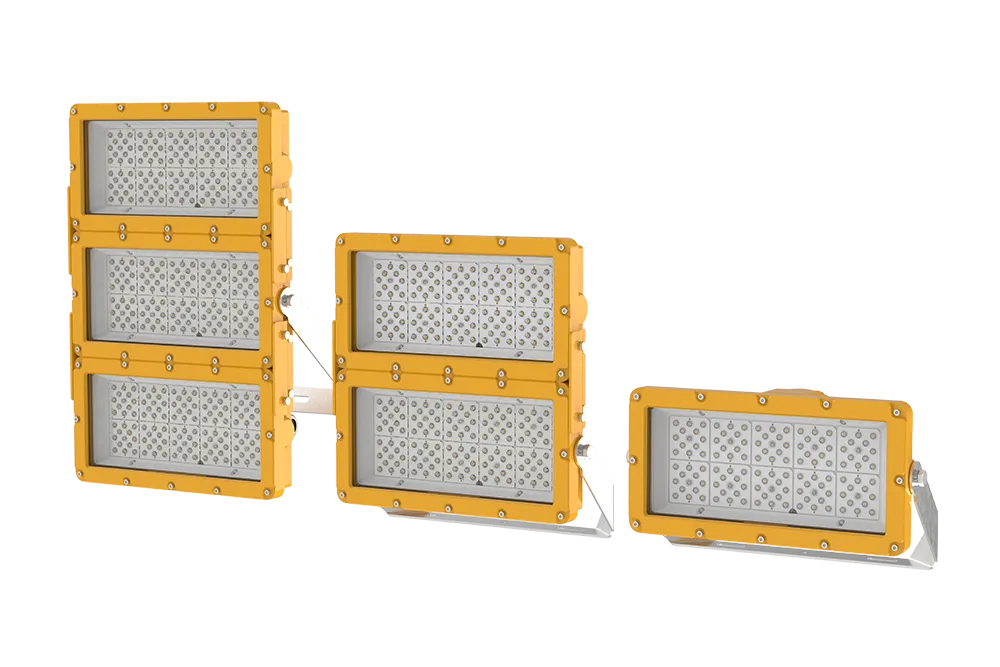
Explosion Qualified Combustible Area Dangerous Proof} Units are exclusively constructed lighting solutions built to execute safely within conceivably volatile sites. These solid fixtures avoid sparks, thermal flux and electric sparks from provoking a significant explosion. They usually incorporate tailored designs, involving like tight housings and essentially safe electrical items to guarantee safety benchmarks in markets like oil & combustible gas processing, manufacturing plants, ore processing operations, and drug production.
Electing the Appropriate Spark-Proof Luminaires for Critical Sites
Figuring out the most suitable detonation-safe fixtures for a selected danger zone involves meticulous examination. Elements such as the rating (e.g., Segment I, II, or III and sections 0) should be carefully verified to confirm agreement with suitable defense standards. Additionally the area's typical menaces, consider atmospheric parameters, covering heat and precipitation, to pick a durable and protected fix. Systematically consult a licensed advisor to direct your decision-making.
Places Where Are Needed Explosion Proof Lights?
Explosion-proof commonly known as intrinsically safe|hazardous location|Class-rated} lights are essentially needed in various areas where reactive chemicals or residues could potentially create a explosive atmosphere. This commonly includes refinery handling plants, protective layer application areas, foodstuff handling facilities, and wastewater treatment locations. Regulations, such as those from OSHA and NEC, mandate their setup in these regions to curtail the risk of ignitable events and preserve operational effectiveness.
Upsides of Semiconductor in Explosion Proof Lighting
Switching to LED technology for intrinsically safe lighting offers a significant number of positives. First, LEDs boast a remarkably longer activity span compared to traditional neon units, reducing support outlays and breaks. They are also fundamentally safer, producing reduced warmth which minimizes the exposure of arcing in perilous atmospheres. Additionally, solid-state lights are increasingly energy efficient, leading to declined voltage use fees and a diminished environmental influence. Finally, the solid structure of Light Emitting Diode contraptions sustains the extreme conditions typical of detonation-safe areas.
- Enhanced Duration
- Attenuated Support Charges
- Improved Defense
- Decreased Watt Draw
- Increased Reliability
Overseeing and Inspecting Explosion Proof Lighting Systems
Consistent servicing and careful review of intrinsically safe lighting schemes are vitally mandatory for maintaining risk management and reducing potential liabilities. This necessitates a frequent review of all modules, such as luminaires, ducts, wiring, and affiliated junction boxes. Explicitly, test for oxidation, body damage, and sufficient ground connection. Moreover, validate that all identifications are noticeable and that the illumination fulfills authorized codes.
- Implement visual checks.
- Examine current links.
- Verify ignition safety.
The Future of Explosion Proof Lighting Technology
Advancing landscape of explosion-proof devices ex proof lights technology indicates a meaningful shift from traditional designs. Future systems will heavily incorporate integrated capabilities, enabling non-proximate monitoring, diagnostics, and customizable control. We look forward to a expanding adoption of solid-state technology, not only for its built-in energy efficiency, but also its power to facilitate contained sensors for measuring unstable conditions. Furthermore, materials research is leading innovations in robust frame materials, allowing for compressed and upgraded designs, while securing the vital levels of safety.
- Improved battery life for portable applications.
- Integration with proactive maintenance platforms.
- Development of self-cleaning lens technology.